
ICE Transfers from Burleson County
The Immigration and Customs Enforcement detention network is a federal civil-custody system. It is not part of the Burleson County Jail, the Texas Department of Criminal Justice, or the Federal Bureau of Prisons. The official local materials reviewed did not identify an ICE-owned detention facility in Burleson County. They also did not establish a current county contract to hold ICE detainees. This system page exists because immigration custody may follow a local jail exit, not because an ICE center operates in Caldwell.
Read the local disposition closely. Bond, time served, dismissal, and a court-authorized discharge may describe an exit to the community. An entry naming ICE, an immigration hold, or another receiving agency describes a transfer. Ask the Burleson County Sheriff's Office for the existing custody-movement record when the destination is uncertain. That record can name the next custodian, while ICE sources address what happened after the handoff.
| Local entry | Meaning | Next check |
|---|---|---|
| Released to ICE | County custody ended | ICE ODLS and ERO |
| Community release | No receiving custodian shown | County record and court docket |
| USMS transfer | Federal criminal custody path | Federal court or USMS |
| TDCJ transfer | Texas prison intake path | TDCJ offender information |
Search the ICE Detainee Locator
The official ICE Online Detainee Locator System, commonly called ODLS, is the first public check for present or recent immigration detention. One search route uses the person's A-number and country of birth. The A-number is the federal alien registration identifier. A second route uses the exact biographical fields requested by the portal, including name, date of birth, and country of birth. Exact spelling matters.
- Use the A-number when it is known and enter the country of birth.
- Otherwise, enter the precise name and other biographical fields requested.
- Compare the returned identity before relying on a facility listing.
- Contact the listed facility or ICE ERO when the result needs confirmation.
- Keep the Burleson County movement record with the federal result.
ODLS is chiefly a location tool, not a full historical archive of every immigration release. A missing result does not prove that the person entered the community. Data lag, alternate spelling, the person's age, changed identifiers, or limits in the system can cause a miss. Repeat the search with verified details before moving to the contact route.
ICE ERO Release Confirmation
When ODLS gives no clear answer, use the ICE Enforcement and Removal Operations contact process and ask about the person with precise identifiers. ERO manages immigration enforcement and detention operations. The relevant field office or the facility shown by ODLS is better placed to confirm current location or explain the next contact than the county jail after a completed transfer.
ICE Detention Network
Federal civil immigration custody
Online route: ICE Online Detainee Locator
Fallback: ICE Enforcement and Removal Operations
No ICE detention facility identified in Burleson County
The official ICE detention management page provides the agency's detention information and contact context. It is the source paired with the image below.
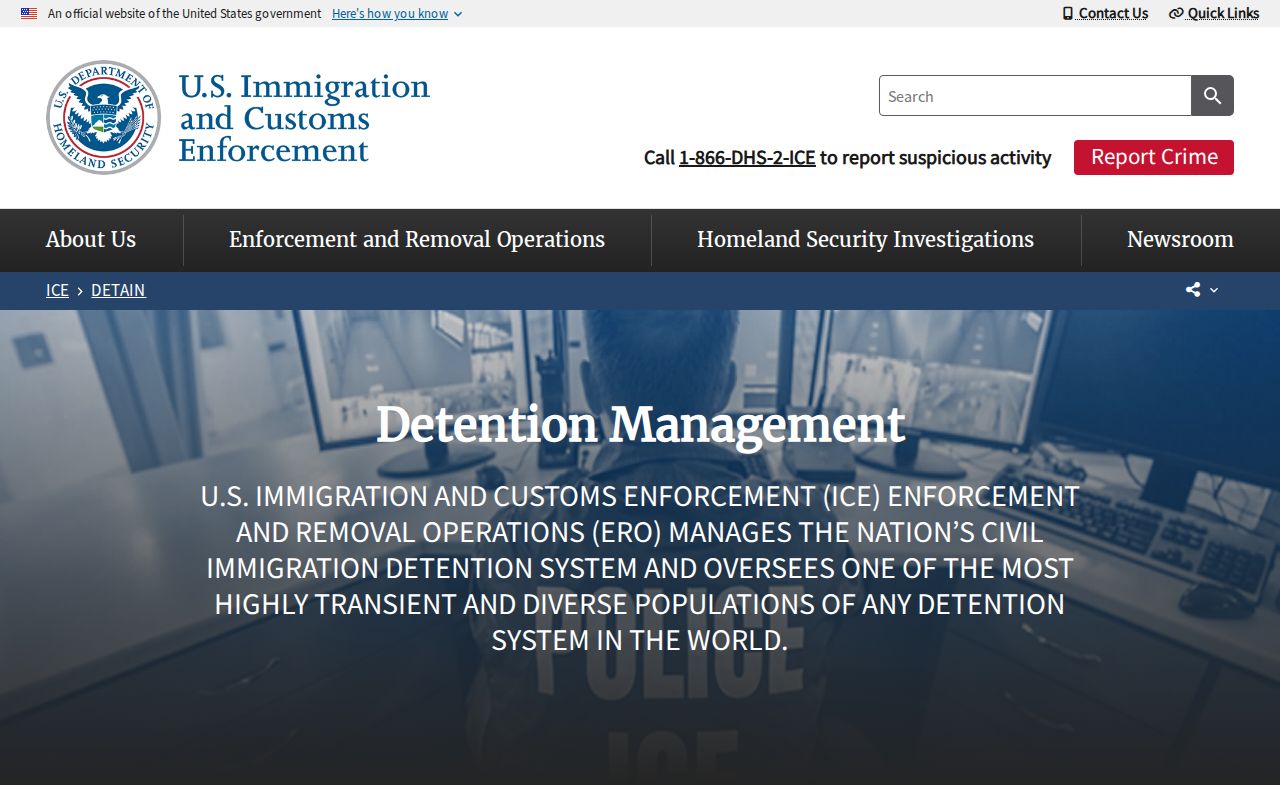
The agency page supports the ERO and facility-contact route when a Burleson County transfer is followed by immigration detention. Do not invent a local address, phone number, visiting schedule, or release desk when the research identifies no county ICE facility.
No Burleson ICE Facility
The absence of a confirmed ICE facility in Burleson County changes how the record should be described. The Burleson County Jail remains the source for the county leg of custody. ICE becomes the source only after a documented immigration handoff. The two records can both be correct even if the county line says released and ODLS shows detention elsewhere.
A service location returned by ICE may be outside the county. Facilities can change, and a detainee may move within the network. Use the live federal result rather than selecting a geographically convenient detention center. The same rule applies to a person's later release. An old facility listing does not establish where the person is now or when ICE custody ended.
What an ICE Result Proves
A positive ODLS result can direct a family member, attorney, or other authorized contact to current detention information. It is useful for finding the responsible facility and choosing the next official contact. The result should be read as a snapshot of the ICE system, not as a county release record or a court judgment.
- A-number
- A federal identifying number used in immigration records.
- ODLS
- The ICE online system for locating people in immigration detention.
- ERO
- ICE Enforcement and Removal Operations, the branch responsible for detention and related enforcement.
- Detainer
- A request or notice tied to another authority's custody; it is not itself proof that a community release occurred.
A negative search is narrower. It shows that the submitted query did not return a useful locator result. It cannot distinguish release, transfer, data delay, a spelling mismatch, or a record outside the portal's scope. Direct confirmation is needed before reporting any of those outcomes.
ICE Release Record Chain
Start with the document closest to each event. For the local exit, request the booking sheet and custody-event history from the Burleson County Sheriff's Office. Ask for the release date and time, disposition or reason, and receiving agency if transferred. For the immigration stage, retain the ODLS result and follow the ERO or facility channel. If a court order matters, obtain it from the court that issued it.
The official county page does not provide a historical release archive or a public recent-release list. A focused written request is therefore more reliable than roster absence. The Burleson County Jail release page describes that local record route. The broader Burleson County release search also distinguishes county, state, federal criminal, and immigration records.
| Question | Best source |
|---|---|
| When did county custody end? | Sheriff custody or release record |
| Was the person handed to ICE? | County receiving-agency field |
| Where is the person in ICE detention? | ODLS, ERO, or listed facility |
| What order controls the case? | The issuing court's record |
ICE and USMS Are Different
ICE civil immigration detention must not be blended with U.S. Marshals Service custody in a federal criminal case. USMS often holds or moves people awaiting federal court action, sometimes through contracted local facilities. Those individuals may never appear as sentenced BOP prisoners. Their path runs through the federal court docket, detention or release order, the relevant Marshals district, and the holding facility.
ICE uses ODLS and ERO. BOP uses its own inmate locator for sentenced federal prison custody and many historical releases. Burleson County uses its Sheriff records for the local jail event. A person can move through more than one of these systems. Keep the dates and status terms tied to the agency that created them.
For example, a county entry naming USMS does not support an ICE claim. A BOP result saying Released does not rule out later ICE custody. An ODLS miss does not establish release from USMS or BOP. Each system answers a separate custody question, which is why the receiving-agency detail is often the most useful field in the county record.
Verify ICE Release Without Guessing
Release from ICE detention requires evidence from the immigration-custody stage. Start with the last confirmed facility or ERO contact and ask for the status channel available for that person. Preserve the date of the inquiry, the A-number used, the exact spelling entered in ODLS, and the wording of any response. If the person was moved, obtain the next facility or office rather than treating the old location's inability to find the record as proof of release.
The legal outcome and the physical custody event may appear in different records. An immigration court action can explain a case milestone, while ICE or a detention facility holds the operational custody information. A county court record generally addresses the Burleson County criminal case, not the separate federal civil proceeding. When a state or federal criminal detainer also exists, still another agency may become the next custodian.
Identity checks remain vital. Compare the full name, date of birth, country of birth, and A-number when available. Do not merge two people because their names look alike. If a record conflict remains, state only what each official source reports. A precise statement such as “county custody ended with ICE listed as the receiving authority” is more accurate than calling the event an unrestricted release.